
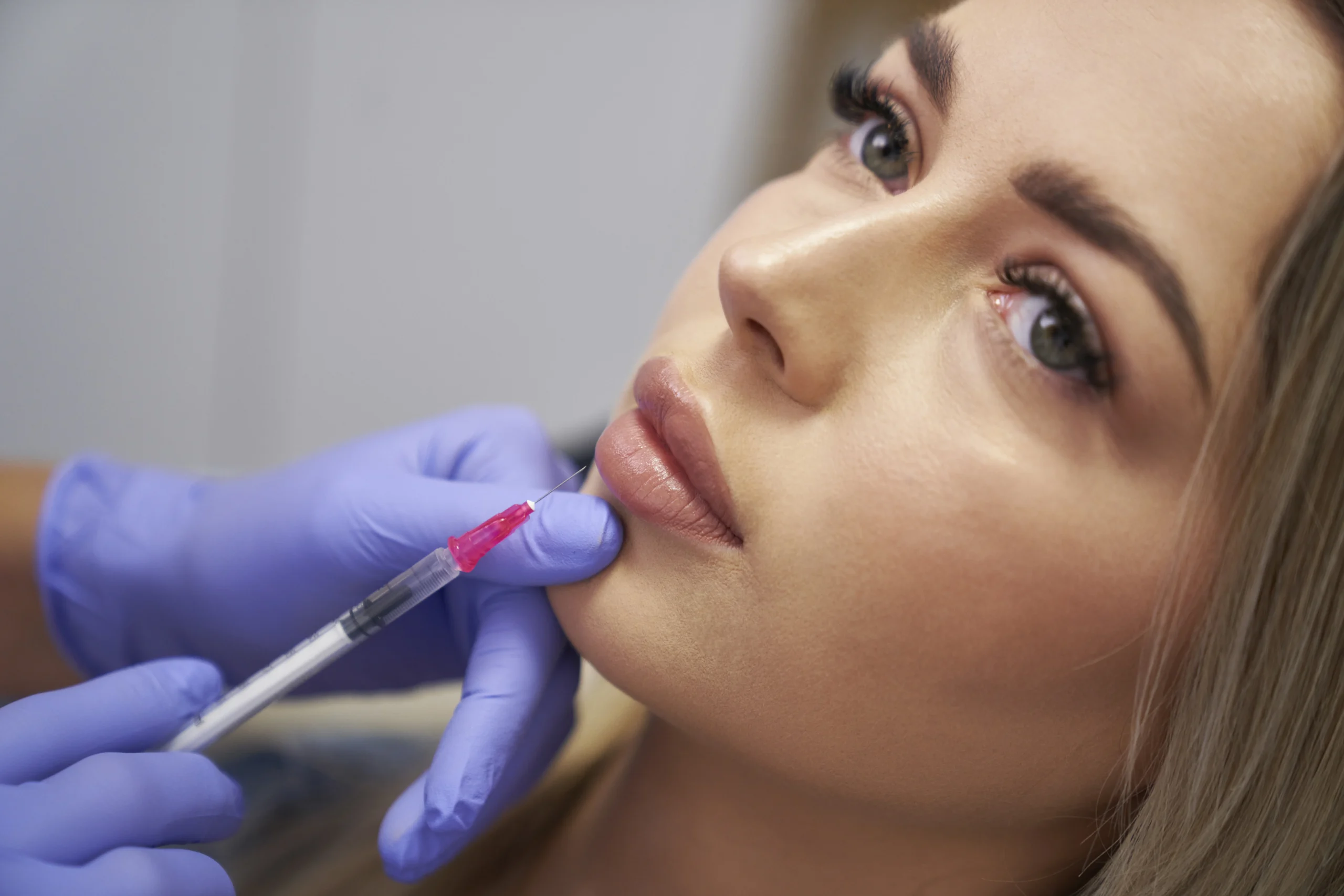
A lip flip and lip filler can both make lips look more prominent, but they work differently. A lip flip uses a small amount of a prescription neuromodulator around the upper lip to temporarily reduce the pull of the orbicularis oris muscle. This can allow more of the pink upper lip to show, but it does not add volume. Lip filler places a gel—often hyaluronic acid—within the lip tissue to add actual fullness, definition, or structure.
The short answer is:
- Choose a lip flip if you want a subtle change in how your upper lip rests or appears when you smile.
- Choose lip filler if you want added volume, more definition, or changes to the shape of the upper lip, lower lip, or both.
- A carefully planned combination may be appropriate for some people, but it is not automatically better.
At Purifi IV & Aesthetics in Brentwood, serving the Nashville area, treatment begins with an assessment of your lip anatomy, facial proportions, muscle movement, medical history, and goals. You can also explore Purifi’s neuromodulator treatments and hyaluronic acid dermal fillers before your consultation.
Lip Flip vs. Lip Filler: Quick Comparison
| Factor | Lip Flip | Lip Filler |
| Primary goal | A subtle change in how the upper lip shows | volume, shape, definition, or structure |
| How it works | Temporarily reduces selected upper-lip muscle activity | Places injectable gel within the lip tissue |
| Adds volume? | No | Yes |
| Areas treated | Primarily the upper lip | Upper lip, lower lip, or both |
| When results appear | Gradually; full effect around 10–14 days | Visible right away, with swelling at first |
| How long it may last | Often about 6-8 weeks, depending on dose | Often about 6 to 12 months, depending on the product and patient |
| Downtime | Little visible downtime, but temporary changes in sipping, speech, or lip seal can occur | Swelling, tenderness, or bruising may last days and occasionally longer |
| Can it be reversed? | There is no instant reversal; the effect fades with time | Some HA filler can be reduced with hyaluronidase, but removal may be incomplete and requires another medical procedure |
| Cost pattern | Usually lower per visit but may require more frequent maintenance | Usually higher per visit but often lasts longer |
| Regulatory status | Use around the lip for a “lip flip” is off-label | FDA approval is specific to the filler product, age group, and treatment area; some fillers are approved for lip augmentation in adults 22 and older |
Results and duration vary based on the product, dose or amount used, anatomy, metabolism, technique, and treatment history.
What Is a Lip Flip?
A lip flip uses a botulinum toxin type A neuromodulator to change the movement of the upper lip. The injector places small amounts at selected points in or near the orbicularis oris, the circular muscle that helps you purse and close your lips.
When part of that muscle’s pull is temporarily reduced, the upper lip may roll slightly outward and show more vermilion—the pink portion of the lip. The change is usually most noticeable in someone whose upper lip turns inward or becomes less visible when smiling.
A lip flip does not:
- Add lip tissue or measurable volume
- Make the lower lip fuller
- Provide the same shaping control as filler
- Produce an immediate result
- Work the same way for every smile or lip shape
A small prospective 2026 study found a modest increase in upper-lip height after onabotulinumtoxinA treatment without an increase in lip volume. The study included only 17 participants, so it supports the mechanism but should not be treated as a guarantee of an individual result. Read the study abstract on PubMed.
Who may prefer a lip flip?
A lip flip may fit your goals if:
- Your upper lip rolls inward or seems to disappear when you smile
- You want a very subtle upper-lip change without added volume
- You are comfortable with a temporary result and more frequent maintenance
- You understand that mouth movement may feel different while the treatment is active
What are the limits and risks of a lip flip?
Because the orbicularis oris helps with speaking, sipping, whistling, using a straw, and keeping liquids in the mouth, relaxing it can temporarily affect those functions. Other possible effects include bruising, tenderness, asymmetry, an altered smile, drooling, or difficulty fully closing the lips.
Botulinum toxin products also carry important product-specific warnings. Seek medical help right away for trouble swallowing, speaking, or breathing, or for symptoms of widespread muscle weakness after treatment. Your provider should review the medication guide, your medical conditions, and your medications before treatment.
If you are deciding among neuromodulator brands, Purifi’s guide to Botox vs. Dysport vs. Jeuveau explains why their units, formulations, and dosing cannot be compared one-for-one.
What Is Lip Filler?
Lip filler is an injectable material placed within or around the lip tissue. At Purifi, the relevant treatment category is hyaluronic acid dermal filler. Hyaluronic acid is a type of sugar naturally present in the body; in filler form, it is a manufactured gel designed to create temporary fullness or contour.
Depending on the product, amount, placement, and your anatomy, lip filler may be used to:
- Add volume to the upper lip, lower lip, or both
- Define the lip border or Cupid’s bow
- Improve the visual balance between the upper and lower lips
- Address certain asymmetries
- Restore some age-related volume loss
The FDA approves individual fillers for specific uses—not filler as a category for every person or every location. Some products are approved for lip augmentation in adults age 22 and older. Ask your injector for the product name, its patient labeling, and whether the planned placement is an FDA-approved use. The FDA’s dermal-filler guidance explains approved uses and patient considerations.
When do lip filler results settle?
Added volume is visible immediately, but the first look is not the final result. Swelling, redness, tenderness, firmness, and bruising can temporarily make the lips look or feel different. Many people wait about two weeks before evaluating the result, although recovery varies and some effects can last longer.
If you are planning filler before a wedding, conference, photo session, or other important event, allow a generous buffer and ask your injector how far in advance to schedule.
What are the risks of lip filler?
Common reactions include swelling, bruising, redness, pain, tenderness, itching, and temporary firmness or lumps. Infection, inflammatory reactions, nodules, allergic reactions, migration, and delayed reactions are also possible.
The most serious filler risk is unintentional injection into a blood vessel. This can reduce blood supply and cause tissue death; reported complications also include vision changes, blindness, and stroke. The FDA advises seeking immediate medical attention for unusual or increasing pain, white, gray, or blue skin near the injection site, vision changes, or stroke symptoms during or shortly after treatment.
These risks are why filler should be treated as a medical procedure performed with an FDA-approved product by a licensed healthcare professional trained in facial anatomy, injection technique, and complication management.
Is Lip Filler Completely Reversible?
“Reversible” is an oversimplification. Clinicians may use hyaluronidase, an enzyme, to reduce some hyaluronic acid filler, including to manage certain complications. However:
- It does not apply to every type of filler
- One treatment may not remove all of the filler
- The response can be difficult to predict
- Hyaluronidase has its own risks, including allergic reactions
- Additional treatment or surgery may sometimes be needed
Do not view dissolving as a substitute for careful product selection, conservative treatment, informed consent, and an injector who is prepared to recognize and manage complications.
Which Treatment Better Matches Your Goal?
If you want your upper lip to show more when you smile
A lip flip may be the closer match, especially if you already like your lip volume and only want to change how the upper lip moves. The effect is subtle and varies with anatomy.
If you want visibly fuller lips
Lip filler is generally the more appropriate option because it adds volume. A lip flip cannot create the same fullness, even if it reveals slightly more of the upper lip.
If you want more definition or shape
Filler provides more control over the border, Cupid’s bow, projection, and balance between the upper and lower lips. Not every asymmetry can or should be corrected completely, and your injector should explain what is realistic.
If you want to enhance the lower lip
Lip filler is usually the relevant treatment. A classic lip flip focuses on upper-lip movement rather than lower-lip volume.
If you want the lower upfront price
A lip flip usually costs less per appointment because it uses less neuromodulator. However, it often requires more frequent treatment. Lip filler generally costs more upfront but may last longer. Compare the expected annual maintenance cost—not just the price of one visit.
Purifi’s website does not publish a fixed price for either treatment. Your quote should reflect the product, treatment plan, amount used, and current clinic pricing. Confirm the total price before treatment rather than relying on national online averages.
Can You Combine a Lip Flip and Lip Filler?
Some patients may be candidates for both because the treatments address different concerns: filler adds volume or structure, while a lip flip changes muscle movement. That does not mean everyone benefits from combining them.
Your provider may recommend one treatment, both in a staged plan, or neither. Staging can make it easier to evaluate the effect of each treatment and avoid unnecessary product. The FDA notes that controlled clinical studies have not evaluated the combined use of dermal fillers and botulinum toxin products, so the decision should be individualized and discussed during consent.
Is a Lip Flip the Same as Treating a Gummy Smile?
No. A lip flip targets the orbicularis oris to reveal more of the upper lip. Neuromodulator treatment for excessive gum show may target different muscles that elevate the upper lip. The injection pattern, goal, and risks are not interchangeable.
If gum show is your primary concern, tell your injector directly. A facial-movement assessment is needed to determine the cause and whether any treatment is appropriate.
Who Should Wait or Ask More Questions Before Treatment?
Tell your provider about your complete medical history, medications, supplements, allergies, previous facial procedures, dental work, history of cold sores, and any prior reaction to filler or botulinum toxin.
You may need to delay or avoid treatment if you have an active infection or inflammation near the injection site. Pregnancy, breastfeeding, bleeding disorders, severe allergies, neuromuscular conditions, and certain medications require specific discussion because safety information and contraindications differ by product.
Do not stop a prescribed medication or supplement solely to prepare for an aesthetic treatment unless the clinician who manages it tells you to do so.
Lip Flip and Lip Filler Consultations in Brentwood, TN
No treatment is universally “better.” The right option depends on whether you want a change in movement, true volume, more structure, or no treatment at all.
Purifi IV Nashville is led by two board-certified physicians and provides individualized aesthetic consultations in Brentwood, Tennessee. Learn more about Purifi’s physician-led team, or book a comprehensive consultation to discuss your goals, candidacy, expected result, risks, alternatives, and current pricing.
Frequently Asked Questions
Does a lip flip make your lips bigger?
No. A lip flip may expose slightly more of the upper lip by changing muscle movement, but it does not add volume. If you want larger or more projected lips, filler is generally the treatment that addresses that goal.
How long does a lip flip last compared with lip filler?
A lip flip often lasts several weeks to a few months. Hyaluronic acid lip filler commonly lasts several months, and many products last about 6 to 12 months. Individual results vary by product, anatomy, metabolism, dose or amount, placement, and treatment history.
How many units are used for a lip flip?
There is no universal number. Dosing depends on the specific product, lip strength, anatomy, injection pattern, and desired effect. Units of BOTOX, Dysport, Jeuveau, Xeomin, and other botulinum toxin products are not interchangeable, so comparing unit counts across brands can be misleading.
Which looks more natural: a lip flip or filler?
Either can look natural when the treatment matches your anatomy and goals. A lip flip is usually the subtler change. Filler can also be conservative, but it adds volume and can make a more visible difference.
Does a lip flip affect eating or speaking?
It can. Temporary difficulty sipping, using a straw, pronouncing certain sounds, whistling, or keeping liquids in the mouth is possible because the treated muscle helps control the lips. Discuss the functional tradeoff before treatment.
Can hyaluronic acid lip filler be dissolved?
Some HA filler can be reduced with hyaluronidase, but the process is not guaranteed to be complete or predictable and may require more than one treatment. It also carries its own risks. Urgent symptoms after filler require immediate clinical evaluation—not a routine future dissolving appointment.
Can you get a lip flip and lip filler at the same appointment?
Some clinicians perform both, but suitability and timing depend on the patient. A provider may recommend staging the treatments so you can evaluate each result separately. The FDA has not evaluated combined use in controlled clinical studies.
How much do a lip flip and lip filler cost in Nashville?
Prices vary by product, provider, amount used, and treatment plan. A lip flip is usually less expensive per visit but may need more frequent maintenance; filler generally costs more upfront and tends to last longer. Ask for a treatment-specific quote and compare expected maintenance over a year.